
The Forgotten Power of Rites and Rituals
Why Modern People are Rediscovering Ritual
Have you ever felt like life is moving so quickly that you’re barely present for it?
Days blur together. Weeks disappear. Seasons change before we’ve had time to notice them.
Many people feel disconnected, not because they lack information, but because they lack meaning. We know more than any generation before us, yet many of us feel strangely untethered.
I think part of the reason is that we’ve lost touch with something our ancestors understood well: the power of rites and rituals.
For thousands of years, human beings used rites and rituals to navigate life. They helped people mark important transitions, connect with something larger than themselves, and bring intention to ordinary days.
Today, many of those practices have faded. Yet the need they served remains.
Perhaps that is why so many people are rediscovering journaling, prayer, meditation, gratitude practices, and other forms of intentional living. Beneath the surface, they are searching for what human beings have always searched for:
A way to create meaning.
What We Lost When We Abandoned Rites and Rituals
Previous generations marked life differently.
Births were celebrated.
Coming-of-age ceremonies welcomed young people into adulthood.
Marriages were community events.
Deaths were honored with rituals of remembrance and mourning.
Even the changing seasons often carried significance.
Life wasn’t simply something that happened. It was something that was acknowledged.
Today, many of us move from one chapter to the next without ever pausing to recognize what has changed.
We graduate and immediately worry about what’s next.
We move to a new city without honoring what we’re leaving behind.
We end relationships without creating space to process the ending.
We achieve major goals and barely stop to celebrate them before chasing another.
Something important gets lost when life becomes a continuous stream of activity without reflection.
Why Every Civilization Created Rites and Rituals
One of the most fascinating things about rites and rituals is that they appear almost everywhere human beings have lived.
Ancient Egyptians practiced elaborate rites surrounding birth, death, and the afterlife. Indigenous cultures around the world developed initiation ceremonies to mark the transition into adulthood.
Religious traditions such as Christianity, Islam, Judaism, Hinduism, and Buddhism all contain rituals designed to help people remember, reflect, and reconnect with something larger than themselves.
These traditions emerged across different continents and across thousands of years of history, often without any connection to one another.
That raises an interesting question.
If so many cultures independently developed rites and rituals, perhaps they are responding to a universal human need.
Human beings do not simply want to survive. We want to understand where we are, who we are becoming, and how our lives fit into a larger story.
Rites and rituals have long helped us answer those questions.
Rituals and Rites: What's the Difference?
Although the words are often used interchangeably, they serve different purposes.
A ritual is usually a recurring practice.
Something you return to regularly.
Prayer.
Meditation.
Journaling.
A daily gratitude practice.
Lighting a candle before spending a few quiet moments in reflection.
Brewing a cup of tea and sitting in silence before the demands of the day begin.
Rituals help us navigate ordinary life.
Rites are different.
A rite marks a transition.
Marriage is a rite.
Graduation is a rite.
Funerals are rites.
Retirement can be a rite.
A personal ceremony marking the beginning of a new chapter can also be a rite.
Rites help us navigate extraordinary moments.
Rituals help us live intentionally.
Rites help us change intentionally.
Human beings need both.
Rituals vs. Habits
A ritual is not the same thing as a habit.
A habit is something you do automatically.
A ritual is something you do intentionally.
You might drink coffee every morning out of habit.
You might also transform that same cup of coffee into a ritual by slowing down, sitting quietly, and using the moment to reflect before the day begins.
The action may look similar from the outside.
The difference is awareness.
Habits help us function.
Rituals help us pay attention.
This distinction matters because many people assume they need elaborate ceremonies to create meaning in their lives.
Often they simply need to bring greater intention to something they are already doing.
Why Human Beings Need Both
Imagine a life with no rituals.
Every day would feel reactive.
You would move from task to task without ever creating space to reconnect with yourself.
Now imagine a life with no rites.
Important transitions would happen without acknowledgment.
You would leave one season of life without consciously entering the next.
This is where many people find themselves today.
They are carrying experiences that were never properly honored.
Losses that were never fully grieved.
Achievements that were never celebrated.
Transformations that were never acknowledged.
Rites and rituals help us pay attention.
And paying attention is often where transformation begins.
The Three Purposes of Ritual

Across cultures and traditions, rituals tend to serve three important functions.
1. They Help Us Pause
Rituals interrupt the momentum of daily life.
They create a moment in which we stop reacting and begin paying attention.
2. They Help Us Notice
Many of life’s most meaningful experiences pass by unnoticed.
Rituals draw our awareness back to what matters.
3. They Help Us Participate
Life is not something that simply happens to us.
Rituals remind us that we can participate consciously in our own growth, healing, creativity, and transformation.
Pause.
Notice.
Participate.
At their core, many rituals are simply different ways of helping us do those three things.
Why Modern Life Feels Ritual-Poor
Modern life offers many conveniences, but it often removes the natural markers that once helped people make sense of their lives.
People move frequently.
Families are spread across different cities and countries.
Many traditional community institutions play a smaller role than they once did.
Our attention is constantly divided by screens, notifications, and endless streams of information.
As a result, many transitions pass by without acknowledgment.
A promotion.
A move.
A loss.
A personal breakthrough.
Life changes, but we rarely stop long enough to recognize the change.
Perhaps that is one reason so many people feel disconnected from meaning despite having more information than any generation before them.
Rituals Create Sacred Space
One reason rituals have endured for thousands of years is that they help us distinguish between ordinary time and sacred time.
Most of life happens automatically. We move from task to task, responding to demands and obligations. Rituals interrupt that momentum.
When you light a candle before prayer, open a journal before reflection, or sit quietly with a cup of tea before the day begins, you are doing more than performing an action. You are creating a threshold.
You are saying:
“This moment matters.”
Over time, these small acts teach us to approach our lives with greater awareness. They remind us that meaning is not something we occasionally stumble upon. Meaning often emerges because we intentionally create space for it.
Creating Meaning Through Daily Rituals
One of the beautiful things about rituals is that they don’t have to be complicated.
You don’t need special training.
You don’t need to belong to a particular religion.
You simply need intention.
A ritual does not have to be elaborate. It might be sitting on a porch with a cup of tea before the day begins. Watching the sunrise. Taking a quiet walk through nature. Watering your plants each morning. Reading for pleasure before bed. Even drinking a cup of coffee in silence can become a ritual when approached with attention and intention.
Start by asking yourself a simple question:
What do I need more of right now?
Peace?
Gratitude?
Creativity?
Prayer?
Clarity?
Let that answer guide your ritual.
A Morning Reflection Ritual
Many people begin the day by checking their phone.
What if you began with yourself instead?
Spend ten minutes each morning writing in a journal.
Reflect on what you’re grateful for.
Record your intentions for the day.
Notice what thoughts are present.
Using a dedicated fountain pen or favorite writing tool can help transform the experience from a task into a meaningful practice.
Many people are surprised by how quickly a simple practice begins to change their awareness.
The journal itself is not doing anything magical.
The transformation comes from creating a consistent place where reflection can occur.
Over time, you begin noticing patterns.
Questions.
Insights.
You become less reactive and more observant.
What starts as a writing practice often becomes a relationship with yourself.
A Prayer Ritual
Prayer has existed in nearly every spiritual tradition throughout history.
Not because people always expected answers, but because prayer creates relationship.
It reminds us that we are not alone.
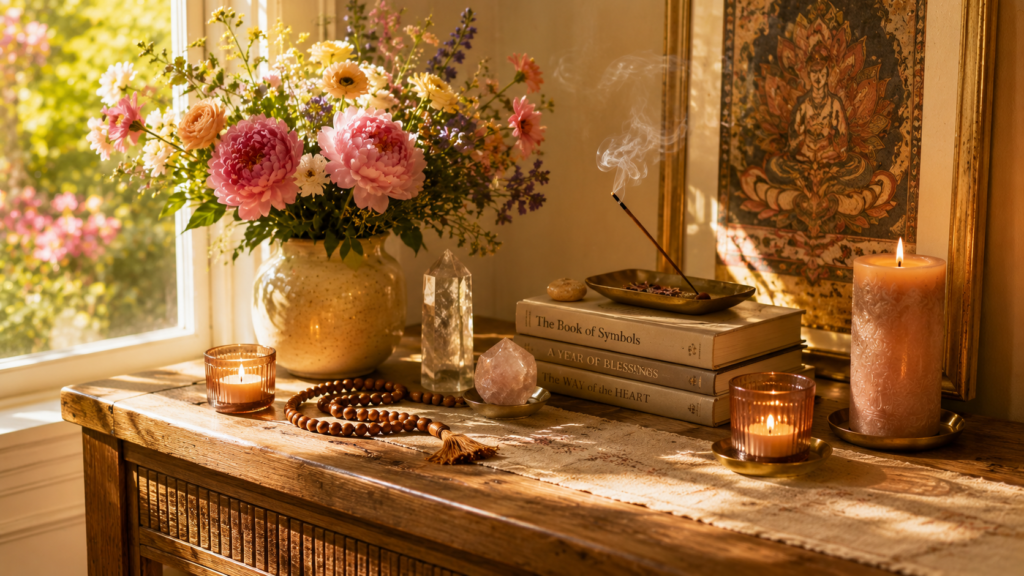
You might create a quiet corner in your home with a candle, prayer beads, or a devotional journal.
The purpose isn’t the objects themselves.
The purpose is creating a space that signals to your mind and spirit that something sacred is about to occur.
Across cultures and throughout history, prayer has often been paired with physical objects that help anchor attention.
Prayer beads.
Candles.
Devotional books.
Sacred texts.
These objects are not the source of the practice.
They simply help create an environment that supports presence and focus.
Sometimes the mind needs something tangible to help it enter a quieter state.
A Gratitude Ritual
Gratitude becomes more powerful when it moves beyond a fleeting thought.
Consider ending each day by writing three things you appreciated.
A dedicated gratitude journal can become a record of blessings you might otherwise forget.
Over time, this simple ritual changes what you notice.
Reclaiming the Lost Art of Rites
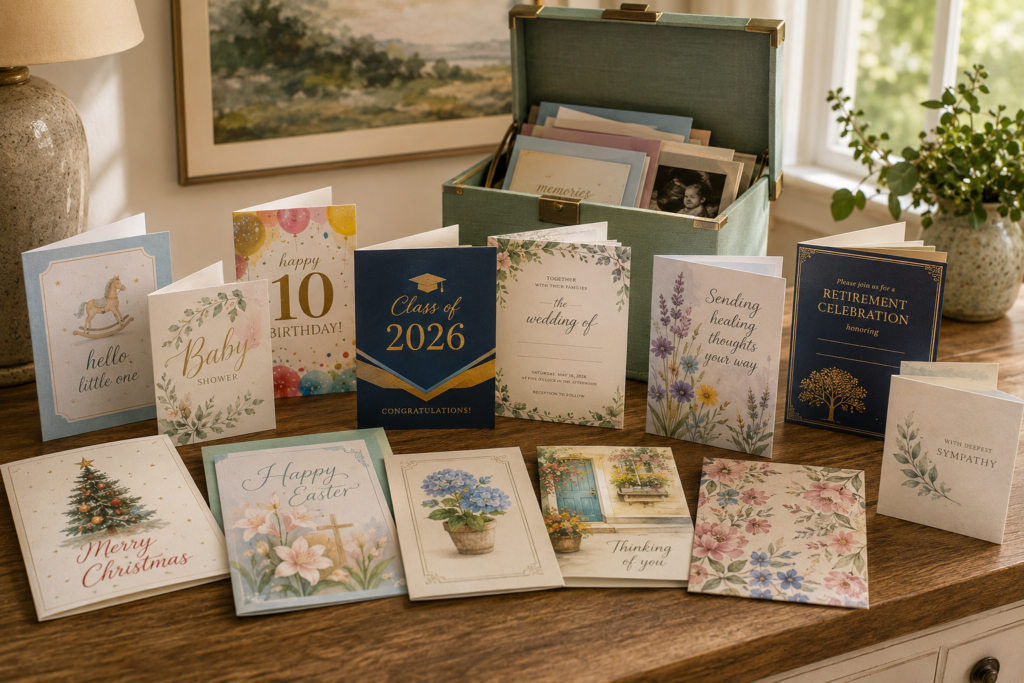
While rituals support daily life, rites help us navigate change.
This is where many modern people feel a hidden absence.
We often experience major life transitions without any meaningful way to honor them.
A move. A divorce. Retirement. The birth of a child.
These moments change us, yet many pass with little acknowledgment beyond a calendar date or social media post.
Sometimes the soul needs a moment to catch up to what has already happened.
But there is no rule that says a rite must come from an institution.
You can create one yourself.
A Rite for a New Beginning
Starting a new business.
Moving to a new city.
Beginning a new relationship.
Entering retirement.
These moments deserve recognition.
One simple practice is to write a letter to your future self in a journal or on quality stationery.
Describe the chapter you are leaving.
Describe the chapter you hope to enter.
Seal it away and revisit it later.
The act itself creates a threshold between what was and what is becoming.
A Rite for Letting Go
Sometimes a chapter must end before another can begin.
The end of a relationship.
The loss of a loved one.
A dream that no longer fits who you are.
These experiences often need acknowledgment.
You might light a memorial candle, write in a memory journal, or create a small space with meaningful photographs and mementos.
Again, the objects are not magical.
They simply help make an invisible transition visible.
Psychologists have long observed that symbolic acts can help people process change.
A farewell letter.
A memorial service.
A retirement celebration.
A graduation ceremony.
These moments do not erase grief or uncertainty.
They help make invisible transitions visible.
The soul often needs a moment of acknowledgment before it can fully move forward.
A Rite for Personal Transformation
Perhaps you’ve completed a major goal.
Overcome a challenge.
Experienced a spiritual awakening.
Reached a milestone that changed your understanding of yourself.
Create a moment to honor it.
Record what you’ve learned in a journal.
Place a meaningful object in a memory box.
Spend time reflecting on the person you were and the person you are becoming.
Without rites, transformation can pass unnoticed.
With rites, it becomes part of your story.
A Seven-Day Ritual of Return
If you’ve never created a personal ritual before, start small.
Choose one object that helps you slow down. It might be a candle, a journal, a cup of tea, or a set of prayer beads.
For the next seven days:
- Sit in the same place each day.
- Begin with a single intentional action such as lighting a candle or preparing tea.
- Take three slow breaths.
- Ask yourself: “What do I need to return to right now?”
- Write your response in a journal.
- Close with a moment of gratitude.
The ritual itself is simple.
The transformation comes from returning to it consistently.
Why does such a simple practice work?
Because rituals gain power through repetition.
Returning to the same place each day teaches your mind to associate that space with reflection.
Using the same object, whether a journal, candle, or set of prayer beads, creates continuity.
Over time, the ritual becomes a doorway.
The moment you begin, your attention naturally follows.
That is why even the simplest rituals can feel surprisingly powerful.
One of the most powerful rituals human beings have practiced throughout history is journaling.
The simple act of putting thoughts on paper creates a space for reflection, self-discovery, and remembrance.
Final Thoughts
We often think of meaning as something we must discover.
Perhaps meaning is also something we create.
That is one of the gifts of rites and rituals.
They invite us to participate consciously in our own lives.
Rituals help us bring attention to ordinary days.
Rites help us bring meaning to extraordinary moments.
Both remind us that life is more than a series of events.
It is a journey of becoming.
And sometimes all it takes to begin is a quiet moment, a journal, a candle, a cup of tea, and the decision to meet your life with greater attention than you did yesterday.
Continue the Journey
Rites and rituals help us create meaning.
They help us pause, notice, and participate more consciously in our lives.
One of the most enduring rituals in human history is the practice of keeping a journal. Across centuries and cultures, people have used journals to preserve memories, explore ideas, process emotions, and better understand themselves.
Many traditions also paired ritual with prayer, contemplation, silence, and fasting. These practices created space for reflection and helped people reconnect with what mattered most.
If this article resonated with you, continue the journey with:
Why Human Beings Have Always Kept Journals — exploring one of history’s most enduring practices of reflection, memory, and self-discovery.
The Lost Art of Fasting — why stepping away from constant consumption can create space for clarity, attention, and renewal.
Together, these practices reveal a simple truth: sometimes the most profound transformations begin with the smallest acts of intention.
Frequently Asked Questions
Do rituals have to be religious?
Not at all.
Many rituals are spiritual, but others are secular. Journaling, gratitude practices, nature walks, and reflective morning routines can all function as rituals.
Can I create my own ritual?
Absolutely.
Many meaningful rituals are deeply personal and created to support a specific season of life.
Why are rites of passage important?
Rites of passage help us recognize significant life transitions. They provide psychological and emotional closure while helping us enter a new chapter with intention.
How long should a ritual last?
There is no rule. A ritual can take two minutes or an hour. What matters is not length but attention.
What is the difference between a habit and a ritual?
A habit is something you do automatically.
A ritual is something you do intentionally.
