
The Lost Art of Fasting
Why Voluntarily Go Without Food?
At first glance, fasting seems strange.
Why would anyone willingly give up food?
In a world filled with convenience, abundance, and endless options, fasting can appear unnecessary, even uncomfortable.
Yet human beings have practiced fasting for thousands of years.
Religious traditions embraced it.
Mystics embraced it.
Philosophers embraced it.
Ordinary people embraced it.
They did not fast because food was bad.
They fasted because they believed there was something valuable to be discovered in the space created by its absence.
That idea may be more relevant today than ever.
Why So Many Traditions Embraced Fasting
One of the most remarkable things about fasting is how often it appears throughout human history.
Ancient philosophers practiced it.
Religious traditions embraced it.
Mystics used it.
Indigenous cultures incorporated fasting into rites of passage and vision quests.
Despite their differences, these traditions often arrived at a similar conclusion:
Periods of voluntary restraint could create greater clarity, awareness, and self-understanding.
The details varied.
The underlying insight remained surprisingly consistent.
Sometimes stepping away from constant consumption helps us see ourselves more clearly.
Why Fasting Was Considered an Art
Historically, fasting was rarely viewed as punishment.
It was viewed as a practice.
An art.
Like prayer.
Meditation.
Journaling.
The goal was not simply to avoid food.
The goal was to cultivate awareness.
People fasted intentionally.
They prepared for it.
Reflected during it.
Learned from it.
The fast itself was only part of the process.
The deeper work was what happened within the space the fast created.
This may be one reason fasting survived for thousands of years.
It was never merely about what people gave up.
It was about what they discovered.
We Live in a Culture of Constant Consumption
Most of us are surrounded by opportunities to consume.
Food.
Entertainment.
Information.
Products.
Opinions.
Notifications.
We rarely experience emptiness because something is always available to fill the space.
If we feel bored, we reach for our phone.
If we feel uncomfortable, we distract ourselves.
If we feel restless, we look for something to consume.
There is nothing inherently wrong with these things.
The question is whether we still know how to be without them.
This is where fasting becomes interesting.
Because fasting is not really about food.
Food is simply the doorway.
Fasting Teaches Us to Pay Attention
One of the first things people notice during a fast is how often they think about food.
The second thing they notice is that not every hunger is physical.
Sometimes what feels like hunger is boredom.
Sometimes it is stress.
Sometimes it is habit.
Sometimes it is emotion.
Fasting has a way of revealing what is happening beneath the surface.
When we remove one source of comfort, we become more aware of ourselves.
We begin to notice our impulses.
Our patterns.
Our automatic reactions.
In this sense, fasting is a practice of attention.
And attention is often where transformation begins.
The Three Gifts of Fasting
Although people fast for many different reasons, fasting often offers three enduring gifts.
Awareness
It reveals habits and impulses that normally operate unnoticed.
Space
It creates room for reflection in a world that constantly demands attention.
Freedom
It reminds us that we do not have to obey every desire the moment it appears.
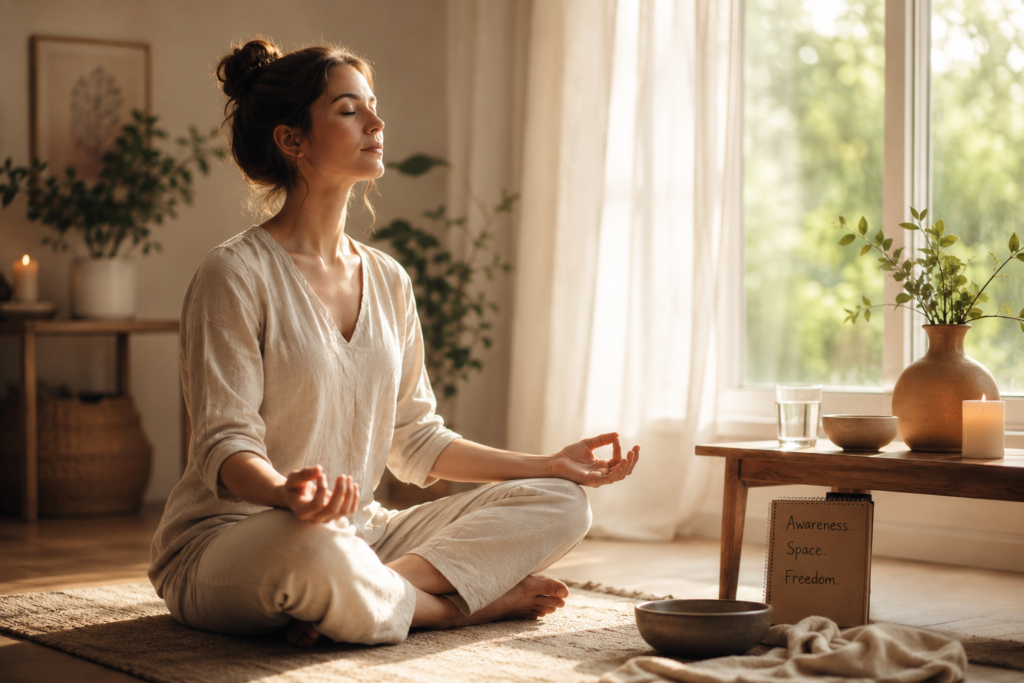
Awareness.
Space.
Freedom.
Much of the value of fasting can be found within those three experiences.
The Spiritual Purpose of Fasting
Throughout history, fasting has been connected to spiritual life.
Before major decisions, many spiritual traditions encouraged periods of fasting and reflection.
The reasoning was simple.
When we temporarily remove one source of noise, it becomes easier to hear what is happening beneath the surface.
This does not guarantee answers.
But it often creates greater clarity.
And clarity is sometimes more valuable than certainty.
People fasted before prayer.
Before important decisions.
Before entering a new season of life.
Before seeking guidance or clarity.
Why?
Because fasting creates space.
We often move through life so quickly that we never hear what our deeper self is trying to tell us.
Fasting slows the conversation.
It gives buried thoughts, neglected questions, and quiet intuitions a chance to rise to the surface.
When we temporarily remove something from our lives, we become more aware of what remains.
Many people describe fasting as a way of quieting the noise.
Not only the noise around them.
The noise within them.
The constant pull of desires, distractions, and habits.
This doesn’t mean fasting magically solves life’s problems.
It means it creates an opportunity to listen more carefully.
And sometimes that is exactly what we need.
The New Forms of Fasting
For most of human history, food was the primary object of fasting.
Today, many people discover they are just as attached to other forms of consumption.
Notifications.
Social media.
Streaming entertainment.
News.
Shopping.
Endless information.
The underlying principle remains unchanged.
When we voluntarily step away from something for a period of time, we learn something about our relationship with it.
That insight can be surprisingly revealing.
Fasting and Self-Mastery
There is another reason fasting has endured for so long.
It teaches self-mastery.
We all have desires.
Some are healthy.
Some are not.
The question is whether we are directing our desires or being directed by them.
Fasting creates a simple challenge.
Can I choose not to satisfy an impulse immediately?
Can I sit with discomfort for a little while?
Can I remain conscious rather than reacting automatically?
These questions extend far beyond food.
They touch nearly every area of life.
Patience.
Discipline.
Focus.
Emotional resilience.
The ability to pause before acting.
In this way, fasting becomes a practice of freedom.
Not freedom to do whatever we want.
Freedom from the need to respond to every urge the moment it appears.
We often assume freedom comes from having unlimited access to what we want.
Yet many people discover a different kind of freedom when they realize they can choose not to reach for something immediately.
That realization can be surprisingly empowering.
It reminds us that we are not merely creatures of habit.
We have the ability to choose.
And choice is where freedom begins.
Fasting Is About More Than Food
Although food fasting is the most common form, it is not the only kind.
Sometimes people fast from social media.
From television.
From shopping.
From news.
From alcohol.
From unnecessary noise.
The principle remains the same.
You remove something for a period of time in order to become more conscious of your relationship with it.
You learn what controls you.
You learn what you truly value.
And you create room for something deeper to emerge.
A Simple Fast You Can Try

Fasting does not need to be extreme.
In fact, simplicity is often best.
Choose one day this week.
Approach it intentionally.
Keep a water bottle nearby.
Many people find that herbal tea helps create a sense of calm and reflection during the process.
Rather than focusing only on what you are giving up, focus on what you are making room for.
Spend time in prayer.
Meditation.
Reflection.
Write your observations in a journal.
Notice what you feel.
Notice what you crave.
Notice what thoughts repeatedly arise.
The goal is not to suffer.
The goal is to learn.
Before beginning, choose an intention.
Not a goal.
An intention.
You are not trying to prove something.
You are trying to learn something.
Perhaps you want greater clarity.
Perhaps you want to become more aware of your habits.
Perhaps you simply want to create a little more space in your life.
That simple shift often transforms the experience.
Keeping a Fasting Journal
One practice that many people find helpful is keeping a dedicated journal during periods of fasting.
Record your observations.
What challenged you?
What surprised you?
What did you learn about yourself?
What became clearer?
Over time, these entries become a record of your growth.
Just as a journal can reveal patterns in your thoughts, it can also reveal patterns in your desires.
And sometimes that awareness is more valuable than the fast itself.
Many people discover that the journal becomes one of the most valuable parts of the fast.
The fast reveals.
The journal records.
Together they help transform fleeting insights into lasting understanding.
Weeks or months later, those observations often reveal patterns that would otherwise have gone unnoticed.
What Fasting Reveals
One of the most powerful aspects of fasting is that it reveals what is already there.
It does not create impatience.
It reveals impatience.
It does not create anxiety.
It reveals anxiety.
It does not create desire.
It reveals desire.
This can be uncomfortable.
But it can also be incredibly liberating.
Because once something becomes visible, it can be understood.
And once it is understood, it can begin to change.
What Most People Discover
Although every fasting experience is different, certain themes tend to appear repeatedly.
People often discover how quickly they seek distraction.
How often they reach for comfort automatically.
How uncomfortable stillness can feel at first.
And how much clarity can emerge when they stop filling every moment.
The lesson is rarely about food alone.
The lesson is often about attention.
A Gentle Beginner's Fast
Fasting is not appropriate for everyone. If you have a medical condition, take medication, are pregnant, or have concerns about fasting, consult a healthcare professional first.
If you are healthy and curious about the practice, begin simply.
The evening before your fast, write down your intention in a journal.
Ask yourself:
“What am I hoping to learn?”
The next day:
- Drink water throughout the day.
- Keep herbal tea nearby if it supports comfort and reflection.
- Use mealtimes as opportunities for prayer, meditation, or quiet contemplation.
- Notice your thoughts without judging them.
- Record observations in a journal.
When the fast ends, do not rush.
Eat slowly.
Reflect on the experience.
Then write one final observation:
“What did this fast reveal?”
One practice creates space.
The other helps you understand what emerges within that space.
Final Thoughts
We often think freedom comes from having more.
More choices.
More comfort.
More convenience.
Fasting offers a different perspective.
Sometimes freedom comes from discovering that we need less than we thought.
That we can sit with discomfort without being controlled by it.
That we can create space rather than constantly filling it.
For thousands of years, people have turned to fasting as a way to cultivate clarity, discipline, and spiritual awareness.
Perhaps the practice has endured for so long because it reminds us of something easy to forget:
Not every desire needs to be satisfied.
Not every impulse needs to be followed.
And sometimes the path to greater freedom begins not by adding something to your life, but by creating space within it.
Continue the Journey
Fasting, journaling, and ritual have endured across centuries because they help human beings do something that modern life often makes difficult:
Pay attention.
Rituals help us bring intention to everyday life.
Journaling helps us preserve experience and understand ourselves more clearly.
Fasting helps us create space for awareness, reflection, and renewal.
Together, these practices invite us to slow down, notice more, and participate more consciously in our own lives.
If you’re exploring these ideas for the first time, you may also enjoy:
The Forgotten Power of Rites and Rituals — why human beings have always created ceremonies, traditions, and meaningful practices to navigate life’s transitions.
Why Human Beings Have Always Kept Journals — exploring one of history’s most enduring tools for reflection, memory, and self-discovery.
Together, these practices reveal a simple truth: lasting transformation rarely comes from a single dramatic moment. More often, it emerges through small acts of attention practiced consistently over time.
Frequently Asked Questions
Does fasting have to be religious?
No.
Many people fast for spiritual, reflective, or personal growth reasons outside any formal religious tradition.
How long should a beginner fast?
Short and simple is often best.
The goal is awareness, not endurance.
Can I fast from something other than food?
Absolutely.
Many people fast from social media, news, entertainment, shopping, or other habitual forms of consumption.
What should I pay attention to during a fast?
Notice cravings, emotions, thoughts, habits, and patterns that arise.
The observations are often more valuable than the fast itself.
Is fasting safe for everyone?
No.
Anyone with medical concerns should consult a healthcare professional before beginning a fast.
